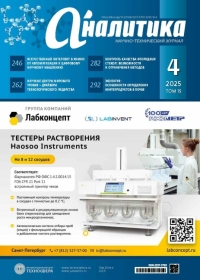
 rus
rus


Opinion
V. P. Ananikov
Classification of Artificial Intelligence Applications in Chemistry: From Automation to Digital Scientific Thinking 10.22184/2227-572X.2025.15.4.246.260
A three-level classification of the application of artificial intelligence (AI) in chemical sciences is proposed, reflecting the increasing degree of involvement of technologies in scientific and production processes: from the automation of routine tasks (AI assistant level) to the creation of specialized analytical solutions for processing experimental data (AI analyst level), and further to the prospect of intelligent systems capable of forming scientific hypotheses and designing substances and processes (AI researcher level). The presented classification can serve as a basis for the formation of roadmaps for the digital transformation of chemical sciences, as well as for the implementation of scientific and technological development programs within priority areas. The term participating technology is introduced for the first time to denote a new form of interaction between humans and AI, in which the digital system becomes part of the scientific process, rather than just a tool.
Classification of Artificial Intelligence Applications in Chemistry: From Automation to Digital Scientific Thinking 10.22184/2227-572X.2025.15.4.246.260
A three-level classification of the application of artificial intelligence (AI) in chemical sciences is proposed, reflecting the increasing degree of involvement of technologies in scientific and production processes: from the automation of routine tasks (AI assistant level) to the creation of specialized analytical solutions for processing experimental data (AI analyst level), and further to the prospect of intelligent systems capable of forming scientific hypotheses and designing substances and processes (AI researcher level). The presented classification can serve as a basis for the formation of roadmaps for the digital transformation of chemical sciences, as well as for the implementation of scientific and technological development programs within priority areas. The term participating technology is introduced for the first time to denote a new form of interaction between humans and AI, in which the digital system becomes part of the scientific process, rather than just a tool.
Tags: artificial intelligence; chemistry; digitalization; ai assistant ии-аналитик ии-ассистент ии-исследователь искусственный интеллект научная автоматизация обработка данных промышленные химические технологии технологическое развитие химия цифровизация
Exhibitions and Conferences
E. A. Zaitceva
Symposium on Ion Chromatography 10.22184/2227-572X.2025.15.4.266.267
Symposium on Ion Chromatography 10.22184/2227-572X.2025.15.4.266.267
Modern laboratory
A. A. Voshkin, A. S. Vashurin
World-class Scientific Centers are the Driver of Russia’s Technological Leadership doi.org/ 10.22184/2227-572X.2025.15.4.262.265
World-class Scientific Centers are the Driver of Russia’s Technological Leadership doi.org/ 10.22184/2227-572X.2025.15.4.262.265
Analytics of Substances and Materials
T. A. Maryutina, Yu. N. Romanova, N. S. Musina
Features of Selection a Method for Determining Oil Products in Soils Depending on Environmental Tasks 10.22184/2227-572X.2025.15.4.292.301
The results of determining oil products (total content, group or individual composition of hydrocarbons) in soils and grounds depend on the correct choice of an analytical method and largely affect the economic costs and effectiveness of decisions taken to restore contaminated areas. The article describes the general principle of selecting methods for determining oil products in soils/grounds in accordance with the specifics of the environmental problem being solved (monitoring the condition of soils, assessing surface and deep pollution, quality control of restoration work, predicting self-healing processes, identifying the source of oil pollution). The need for an integrated approach to selecting methods for determining oil products to identify the specifics and source of pollution is substantiated.
Features of Selection a Method for Determining Oil Products in Soils Depending on Environmental Tasks 10.22184/2227-572X.2025.15.4.292.301
The results of determining oil products (total content, group or individual composition of hydrocarbons) in soils and grounds depend on the correct choice of an analytical method and largely affect the economic costs and effectiveness of decisions taken to restore contaminated areas. The article describes the general principle of selecting methods for determining oil products in soils/grounds in accordance with the specifics of the environmental problem being solved (monitoring the condition of soils, assessing surface and deep pollution, quality control of restoration work, predicting self-healing processes, identifying the source of oil pollution). The need for an integrated approach to selecting methods for determining oil products to identify the specifics and source of pollution is substantiated.
Tags: analysis methods environmental monitoring fluorimetry gas chromatography gravimetry ir spectrometry petroleum products pollution soil source identification газовая хроматография гравиметрия загрязнение идентификация источника ик-спектрометрия методы анализа нефтепродукты почва флуориметрия экологический мониторинг
Analytical Methods and Instruments
A. A. Syrbakov, I. A. Zarubin, A. A. Dzyuba, V. A. Labusov, S. V. Dodonov
Mirrors of the Optical System of Crossed-Dispersion Spectrometers 10.22184/2227-572X.2025.15.4.268.272
The article considers variants of optical systems of a crossed-dispersion spectrometer using a prism to separate spectral orders, using different types of concave mirrors: two spherical mirrors, a collimating spherical and focusing toroidal mirrors, and two free-form mirrors. Using modeling in the Zemax program, the images of the spectrometer entrance slit (spectral lines) in the range of 167–810 nm were studied. It was shown that in the considered variants, the limitation on the entrance slit height due to astigmatism is the same for all schemes. The dependences of the spectral resolution on the wavelength are constructed for three spectral orders – the two extreme ones and the order containing the wavelength of 200 nm. The obtained graphs show that the best resolution is observed when using free-form mirrors. However, the resolution in the case of using spherical mirrors in the scheme deteriorates by no more than 10%, and at a wavelength of 200 nm is 7.8 pm.
Mirrors of the Optical System of Crossed-Dispersion Spectrometers 10.22184/2227-572X.2025.15.4.268.272
The article considers variants of optical systems of a crossed-dispersion spectrometer using a prism to separate spectral orders, using different types of concave mirrors: two spherical mirrors, a collimating spherical and focusing toroidal mirrors, and two free-form mirrors. Using modeling in the Zemax program, the images of the spectrometer entrance slit (spectral lines) in the range of 167–810 nm were studied. It was shown that in the considered variants, the limitation on the entrance slit height due to astigmatism is the same for all schemes. The dependences of the spectral resolution on the wavelength are constructed for three spectral orders – the two extreme ones and the order containing the wavelength of 200 nm. The obtained graphs show that the best resolution is observed when using free-form mirrors. However, the resolution in the case of using spherical mirrors in the scheme deteriorates by no more than 10%, and at a wavelength of 200 nm is 7.8 pm.
Tags: diffraction order echelle grating spectral analyser spectral resolution spectrometer spherical mirror zemax анализатор спектров дифракционная решетка порядок спектра спектральное разрешение спектрометр сферическое зеркало эшелле
M. G. Troian
EXPEC Triple Quadrupole Chromato-Mass-Spectrometers: Instrumental Capabilities and Application Experience 10.22184/2227-572X.2025.15.4.274.280
Liquid Chromatograpy / Tandem Mass-Spectrometry (LC-MS-MS) method has firmly taken its position in the field of analytical chemistry as one of the most informative and reliable methods for studying complex mixtures and individual organic compounds with excellent sensitivity. In our country, LC-MS-MS is actively used for scientific research, petrochemistry, quality control of food products, medicines and veterinary drugs, environmental monitoring, clinical analysis, toxicology and much more.
EXPEC Triple Quadrupole Chromato-Mass-Spectrometers: Instrumental Capabilities and Application Experience 10.22184/2227-572X.2025.15.4.274.280
Liquid Chromatograpy / Tandem Mass-Spectrometry (LC-MS-MS) method has firmly taken its position in the field of analytical chemistry as one of the most informative and reliable methods for studying complex mixtures and individual organic compounds with excellent sensitivity. In our country, LC-MS-MS is actively used for scientific research, petrochemistry, quality control of food products, medicines and veterinary drugs, environmental monitoring, clinical analysis, toxicology and much more.
Tags: liquid and gas chromatographs qualitative and quantitative analysis of mixtures triple quadrupole chromatograph mass spectrometer жидкостные и газовые хроматографы качественный и количественный анализ смесей хромато-масс-спектрометр с тройным квадруполем
A. A. Egorova, G. E. Marina, V. B. Baranovskaia
Quality Control of Fluoride Glasses. A Review of Capabilities and Limitations of Modern Analytical Methods for Solid-Phase Systems 10.22184/2227-572X.2025.15.4.282.291
The development of photonics, infrared optics, and laser spectroscopy has stimulated intensive research on fluoride glasses. However, their complex multicomponent composition and the high sensitivity of functional properties to impurity content require control of composition, structure, and properties at all stages of production. This review summarizes the capabilities of solid-state analytical techniques such as IR and Raman spectroscopy, NMR, SEM, XRF, XRD, and DTA used for these purposes. Unresolved challenges are highlighted, and promising directions for further development in the chemical diagnostics of fluoride glasses are outlined.
Quality Control of Fluoride Glasses. A Review of Capabilities and Limitations of Modern Analytical Methods for Solid-Phase Systems 10.22184/2227-572X.2025.15.4.282.291
The development of photonics, infrared optics, and laser spectroscopy has stimulated intensive research on fluoride glasses. However, their complex multicomponent composition and the high sensitivity of functional properties to impurity content require control of composition, structure, and properties at all stages of production. This review summarizes the capabilities of solid-state analytical techniques such as IR and Raman spectroscopy, NMR, SEM, XRF, XRD, and DTA used for these purposes. Unresolved challenges are highlighted, and promising directions for further development in the chemical diagnostics of fluoride glasses are outlined.
Tags: chemical analysis fluoride glasses photonics rare-earth elements редкоземельные элементы фотоника фторидные стекла химический анализ
Laboratory Accreditation
O. A. Eroshina, I. V. Boldyrev
International Accreditation Organizations. Trends of Development 10.22184/2227-572X.2025.15.4.304.307
The article examines international accreditation organizations, their development trends and the perspectives of domestic accreditation bodies participation in international agreements on mutual recognition of conformity assessment results. The review of the Agreement on Mutual Recognition of APAC and strategic development goals is made. The process of merge of ILAC and IAF has been reviewed, and an overview of common documents and merger activities has been made. The results of the participation of the first Russian accreditation body recognized in APAC and ILAC, the Association of Analytical Centers Analitica, which is the only accreditation body in the Russian Federation with international recognition in terms of accreditation of manufacturers of reference materials, as well as a recognized participant in the APAC and ILAC Mutual Recognition Agreements in the accreditation of testing laboratories and providers of proficiency testing.
International Accreditation Organizations. Trends of Development 10.22184/2227-572X.2025.15.4.304.307
The article examines international accreditation organizations, their development trends and the perspectives of domestic accreditation bodies participation in international agreements on mutual recognition of conformity assessment results. The review of the Agreement on Mutual Recognition of APAC and strategic development goals is made. The process of merge of ILAC and IAF has been reviewed, and an overview of common documents and merger activities has been made. The results of the participation of the first Russian accreditation body recognized in APAC and ILAC, the Association of Analytical Centers Analitica, which is the only accreditation body in the Russian Federation with international recognition in terms of accreditation of manufacturers of reference materials, as well as a recognized participant in the APAC and ILAC Mutual Recognition Agreements in the accreditation of testing laboratories and providers of proficiency testing.
Tags: aac analitica apac ilac international accreditation mutual recognition arrangements prospects recognition of conformity assessment results sanctions аац «аналитика» международная аккредитация признание результатов оценки соответствия санкции соглашения о взаимном признании
Historic chapters
E. V. Rybakova
General history of ion exchange chromatography. Essay on the 50th anniversary of ion chromatography 10.22184/2227-572X.2025.15.4.308.318
The article presents the general history of ion-exchange (ion) chromatography from its origins – studies of ion exchange phenomena (mid. XIX century.), to the modern state of the method (beg. XXI century). The main facts of its development, achievements, development factors and key persons who played a significant role in the development of the method are reflected. It has been shown that ion-exchange chromatography contributed to the intensive development of chromatography in the 20th century, primarily as an instrument of analytical chemistry. Historically, it has been argued that analytical ion exchange chromatography is an integral part of modern ion chromatography.
General history of ion exchange chromatography. Essay on the 50th anniversary of ion chromatography 10.22184/2227-572X.2025.15.4.308.318
The article presents the general history of ion-exchange (ion) chromatography from its origins – studies of ion exchange phenomena (mid. XIX century.), to the modern state of the method (beg. XXI century). The main facts of its development, achievements, development factors and key persons who played a significant role in the development of the method are reflected. It has been shown that ion-exchange chromatography contributed to the intensive development of chromatography in the 20th century, primarily as an instrument of analytical chemistry. Historically, it has been argued that analytical ion exchange chromatography is an integral part of modern ion chromatography.